The Rosary in Latin — Prayers, Text and How to Pray It
The Rosary in Latin is one of the best-loved devotions of the Catholic tradition: a repeated cycle of a few short prayers, prayed while meditating on the mysteries of the life of Christ and the Virgin Mary. For most of the Church’s history these prayers were said in Latin — the traditional, pre-Vatican-II language of the Roman liturgy — and countless faithful still pray them that way today. This article is part of the Learn Latin section of Lapicida and gives you the core prayers in Latin with an English translation, plus the basic sequence for praying the Rosary.
- Signum Crucis — the Sign of the Cross
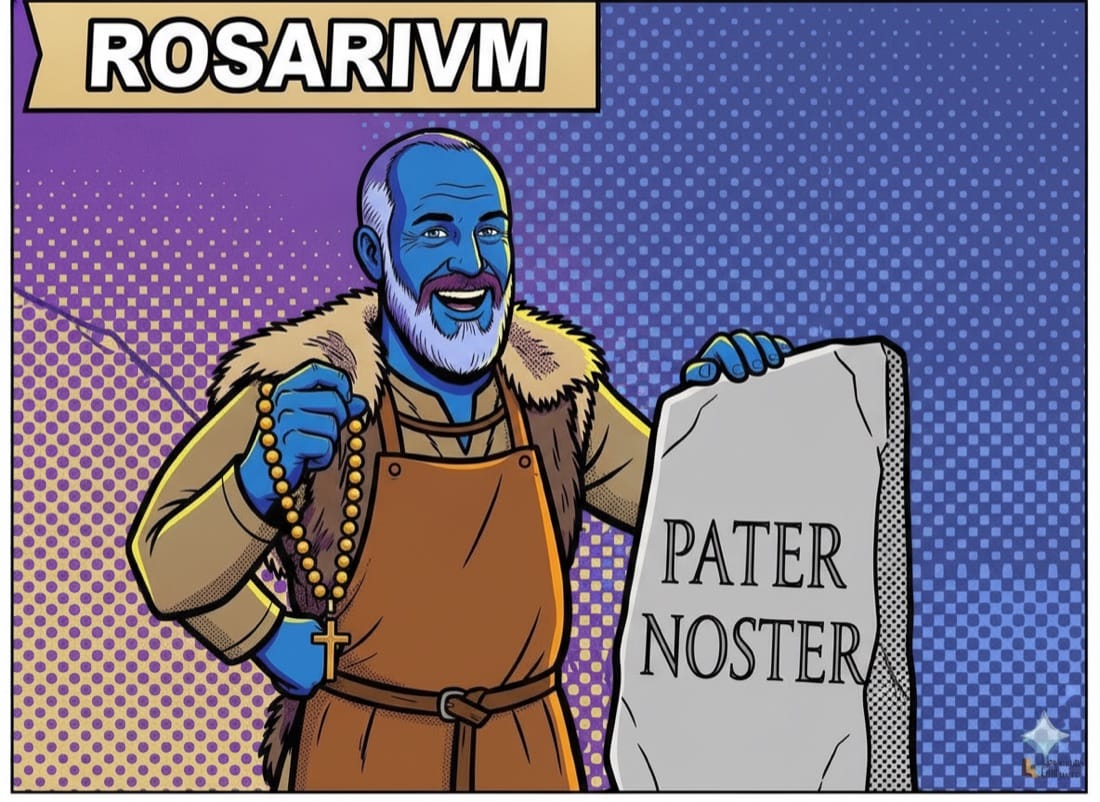
- Pater Noster — the Our Father
- Ave Maria — the Hail Mary
- Gloria Patri — the Glory Be
Signum Crucis — the Sign of the Cross
The Rosary opens and closes with the Sign of the Cross, made while speaking these words:
In nōmine Patris, et Fīliī, et Spīritūs Sānctī. Āmēn.
In the name of the Father, and of the Son, and of the Holy Spirit. Amen.
Pater Noster — the Our Father
The Lord’s Prayer opens every decade of the Rosary. It is the prayer Christ himself taught his disciples:
Pater noster, quī es in caelīs, sānctificētur nōmen tuum. Adveniat rēgnum tuum. Fīat voluntās tua, sīcut in caelō et in terrā. Pānem nostrum cotīdiānum dā nōbīs hodiē, et dīmitte nōbīs dēbita nostra, sīcut et nōs dīmittimus dēbitōribus nostrīs. Et nē nōs indūcās in tentātiōnem, sed līberā nōs ā malō. Āmēn.
Our Father, who art in heaven, hallowed be thy name; thy kingdom come; thy will be done, on earth as it is in heaven. Give us this day our daily bread, and forgive us our trespasses, as we forgive those who trespass against us; and lead us not into temptation, but deliver us from evil. Amen.
Ave Maria — the Hail Mary
The Hail Mary is the prayer repeated most often in the Rosary — ten times in each decade:
Ave Maria, grātiā plēna, Dominus tēcum. Benedicta tū in mulieribus, et benedictus frūctus ventris tuī, Iēsus. Sāncta Marīa, Māter Deī, ōrā prō nōbīs peccātōribus, nunc et in hōrā mortis nostrae. Āmēn.
Hail Mary, full of grace, the Lord is with thee; blessed art thou amongst women, and blessed is the fruit of thy womb, Jesus. Holy Mary, Mother of God, pray for us sinners, now and at the hour of our death. Amen.
Learn Latin now. Our learning app:

Gloria Patri — the Glory Be
This short doxology closes each decade, praising the Holy Trinity:
Glōria Patrī, et Fīliō, et Spīrituī Sānctō. Sīcut erat in prīncipiō, et nunc, et semper, et in saecula saeculōrum. Āmēn.
Glory be to the Father, and to the Son, and to the Holy Spirit. As it was in the beginning, is now, and ever shall be, world without end. Amen.
How to pray the Rosary in Latin
Once you know the four prayers above, praying the Rosary is a matter of following a simple, repeating sequence. The Rosary begins on the crucifix and short introductory chain, then moves through five decades, one for each mystery.
The opening:
- Make the Sign of the Cross (Signum Crucis).
- Pray the Apostles’ Creed (Credo).
- Pray one Our Father (Pater Noster).
- Pray three Hail Marys (Ave Maria).
- Pray one Glory Be (Gloria Patri).
Each of the five decades then follows the same pattern:
- Announce the mystery and pray one Our Father.
- Pray ten Hail Marys, meditating on the mystery.
- Pray one Glory Be.
After the fifth decade the Rosary closes with concluding prayers and the Sign of the Cross once more. Beginners often keep the Latin texts close by at first; with repetition the prayers are quickly learned by heart.
About the author
Andreas Blankenstein is the founder of Lapicida Latinus — and dyslexic himself. When he had to catch up on his Latinum in record time, one thing became clear: endless table-cramming fails exactly the people who learn differently. That is why Lapicida trains grammar in the context of real authorial texts, colour-coded and in short steps. More about Andreas and the Lapicida method →
Frequently asked questions — the Rosary in Latin
What language was the Rosary originally in?
Latin. For most of the Church’s history the Rosary was prayed in Latin, the traditional language of the Roman liturgy, and it is still prayed in Latin by many faithful today.
What are the main prayers of the Rosary?
The four core prayers are the Sign of the Cross (Signum Crucis), the Our Father (Pater Noster), the Hail Mary (Ave Maria) and the Glory Be (Gloria Patri).
Can you pray the Rosary in Latin today?
Yes. Latin remains a valid and widely used language for the Rosary, and the prayers can be prayed in Latin at any time, whether privately or in a group.
Understand the Latin of the Rosary
Learn Latin now. Our learning app: