Latin Mottos & Phrases: 60+ Short Sayings for Tattoos, Crests & Life
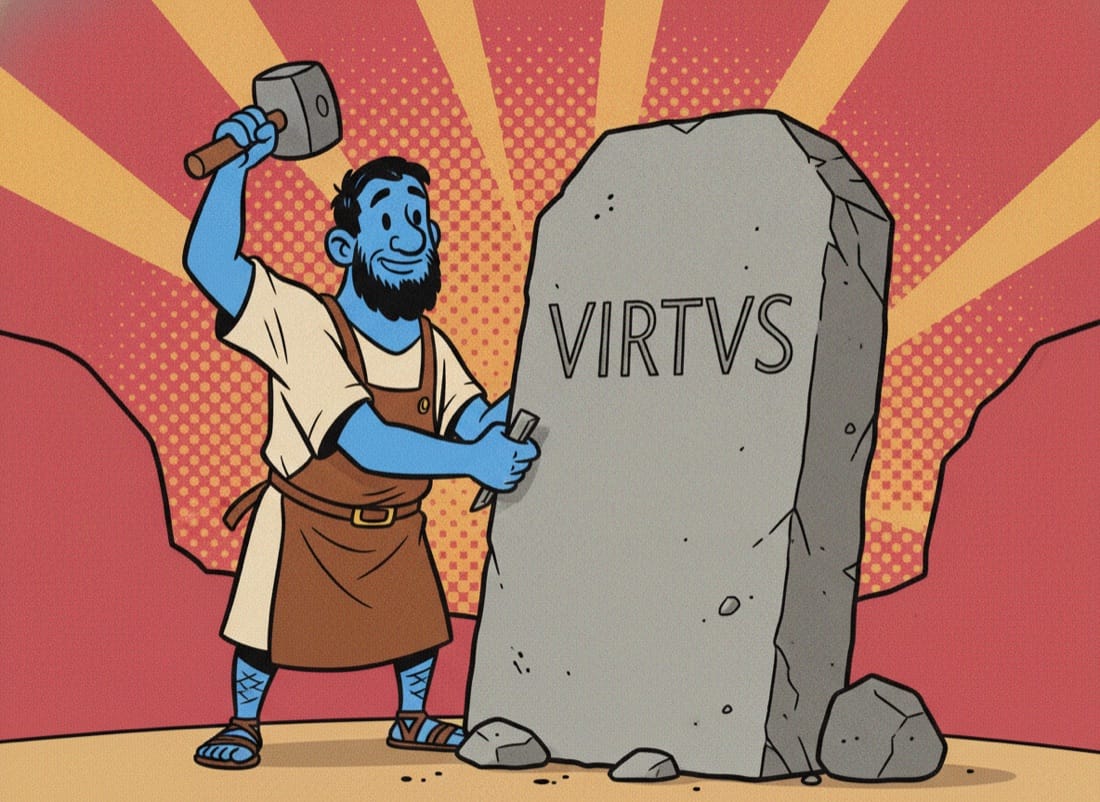
You typed “cool Latin phrase” into a search bar. Fair enough — Latin sounds like it means business. But here’s the honest part most listicles skip: half the “ancient Roman proverbs” floating around online were coined in the last few centuries, or were never fixed phrases at all. A tattoo you’ll wear for life deserves better than a made-up motto.
So this page does two things. It gives you 60+ genuinely usable Latin phrases, sorted by what they’re for — a life motto, a strength tattoo, a family crest, a nod to wisdom. And for every single one, you get a straight translation plus an honest label: classical (attested in a Roman author), proverbial / Neo-Latin (Latin, but coined later), or modern (invented in the last few hundred years). No romance, no invented history.
Learn Latin now. Our learning app:

Looking for the famous author quotes instead — the full stories behind “veni, vidi, vici” or “errare humanum est”? That’s a different job; see our companion guide to famous Latin quotes and sayings.
Life mottos: carpe diem and friends
The classic “how should I live?” cluster. These are the most-tattooed Latin phrases on earth — which is exactly why getting the translation right matters.
| Phrase | Translation | Meaning & label |
|---|---|---|
| Carpe diem | Pluck / seize the day | Classical (Horace, Odes 1.11). Not “party hard” — Horace means use today, don’t bank on tomorrow. |
| Memento mori | Remember you will die | Phrase later, sentiment ancient. The reminder-of-death idea is Roman; this fixed phrase is medieval Christian. |
| Tempus fugit | Time flees | Classical root (from Virgil, Georgics 3.284, “fugit irreparabile tempus”). The two-word motto is a later shortening. |
| Dum spiro, spero | While I breathe, I hope | Proverbial. No single Roman source; a later motto. Cicero has a close cousin. |
| Amor fati | Love of one’s fate | Modern. Coined by Nietzsche (19th c.) for a Stoic idea. Beautiful, but not Roman. |
| Carpe noctem | Seize the night | Modern. A playful spin on carpe diem. Correct Latin, invented recently. |
| Ad astra | To the stars | Classical fragment. Appears inside Virgil’s “sic itur ad astra.” Great two-word tattoo. |
Strength & courage: mottos that mean business
The “fortune favours the bold” family — and yes, there are three different Roman versions, worth knowing before you ink one.
| Phrase | Translation | Meaning & label |
|---|---|---|
| Fortes fortuna adiuvat | Fortune favours the brave | Classical (Terence, Phormio 203). The most “Roman” version. |
| Audentes fortuna iuvat | Fortune favours the daring | Classical (Virgil, Aeneid 10.284 — original “audentis Fortuna iuvat”). |
| Per aspera ad astra | Through hardships to the stars | Proverbial motto. The fixed phrase is modern; the sentiment echoes Seneca. |
| Sic itur ad astra | Thus one journeys to the stars | Classical (Virgil, Aeneid 9.641). |
| Vincit qui se vincit | He conquers who conquers himself | Proverbial. Rooted in Publilius Syrus; the short motto form is later. |
| Qui audet adipiscitur | Who dares, wins | Modern. A 20th-century motto. Latin is sound, history is not ancient. |
| Fortis et liber | Strong and free | Modern motto. Clean and correct. |
Love & family: crests, rings and devotion
Good for wedding bands, family mottos and tributes. One honest note: the famous “love conquers all” exists in two word-orders, and only one is Virgil’s.
| Phrase | Translation | Meaning & label |
|---|---|---|
| Omnia vincit amor | Love conquers all | Classical (Virgil, Eclogues 10.69, “omnia vincit Amor”). This is the original order. |
| Amor vincit omnia | Love conquers all | Reordered popular form. Same words, famous from art (Caravaggio). Fine to use — just know it’s not the Virgilian order. |
| Semper fidelis | Always faithful | Motto (Neo-Latin). Widely used. Straightforward Latin, not a classical quote. |
| Dux femina facti | A woman led the deed | Classical (Virgil, Aeneid 1.364). A striking line for honouring a woman. |
| Ubi amor, ibi fides | Where there is love, there is trust | Proverbial / Neo-Latin. A motto, not an attested Roman line. |
| Domus, ubi cor | Home is where the heart is | Modern. A Latin rendering of an English saying. Charming, not ancient. |
Wisdom & truth: for the thinkers
Careful here — this cluster is where fake attributions run wild. Two of the most-quoted “philosophical” Latin phrases are not ancient at all.
| Phrase | Translation | Meaning & label |
|---|---|---|
| Sapere aude | Dare to be wise / to know | Classical (Horace, Epistles 1.2.40). Later the motto of the Enlightenment. |
| Esse quam videri | To be, rather than to seem | Classical (Cicero, On Friendship 98). |
| Scientia potentia est | Knowledge is power | Modern — not ancient. Early-modern (Hobbes; Bacon’s related wording). Please don’t caption it “ancient Roman.” |
| Cogito, ergo sum | I think, therefore I am | Modern. Descartes, 17th century. Latin, but not Roman. |
| Veritas | Truth | Single word. Classic on crests and rings. |
| Acta non verba | Deeds, not words | Motto (Neo-Latin). Common, not classically attested. |
| Faber est suae quisque fortunae | Each is the maker of his own fortune | Old-Roman, attributed. Ascribed to Appius Claudius Caecus (c. 300 BC), transmitted via Sallust. Label it cautiously, not as a direct classical quote. |
Short & 1–2 words: perfect for small tattoos
When you want minimal ink with maximum weight. Short doesn’t mean shallow.
| Phrase | Translation | Meaning & label |
|---|---|---|
| Veni, vidi, vici | I came, I saw, I conquered | Classical / attributed (Caesar, reported by Suetonius & Plutarch). |
| Alea iacta est | The die is cast | Classical / attributed (Caesar at the Rubicon). |
| Sic parvis magna | Greatness from small beginnings | Modern motto (Sir Francis Drake). Popular, not Roman. |
| Dum vivimus, vivamus | While we live, let us live | Proverbial / Neo-Latin. An Epicurean-flavoured motto. |
| Lux | Light | Single word. Common on crests. |
| Virtus | Courage / excellence | Single word; to a Roman, manly excellence — broader than “virtue.” |
| Ad maiora | Toward greater things | Neo-Latin toast/motto. A warm “onwards and upwards.” |
Want a date, a legion number or a Roman-numeral element in your design? Get the numerals right first — see Latin & Roman numbers explained.

Phrase vs. quote vs. motto — what’s the difference?
People search all three interchangeably, but they’re not the same thing:
- A phrase is a short, reusable Latin expression — carpe diem, ad astra. You drop it into a caption, a tattoo, a toast.
- A quote is a specific line by a named author, with a source — Horace’s full carpe diem stanza, Caesar’s veni, vidi, vici in context.
- A motto is a phrase adopted by a person, family, school or army as a guiding principle — semper fidelis, sic parvis magna. Many mottos are Neo-Latin: perfectly good Latin, coined in the last few centuries.
The honest rule for tattoos and crests is simple: know which one you’re wearing. For the famous author lines and their full context, head to our famous Latin quotes guide.
Frequently Asked Questions
What is a good short Latin phrase?
For a short, genuinely classical phrase, “carpe diem” (seize the day, from Horace) or “sapere aude” (dare to be wise, also Horace) are hard to beat. For one or two words, “veritas” (truth), “virtus” (courage), “lux” (light) and “ad astra” (to the stars) all work well and are historically sound.
Are these Latin phrases ancient or modern?
It’s a mix, and this page labels each one. Some are genuinely classical, quoted from Roman authors like Virgil, Horace, Cicero and Terence. Others are proverbial or Neo-Latin — correct Latin coined in later centuries. A few famous ones, like “cogito ergo sum” and “scientia potentia est,” are actually modern and were never said by the Romans.
Which Latin phrase is best for a tattoo?
Pick by meaning, then double-check the spelling and the source. “Fortes fortuna adiuvat” (fortune favours the brave) and “per aspera ad astra” (through hardships to the stars) are popular for strength; “amor vincit omnia” (love conquers all) for love. Whatever you choose, verify the exact wording before you ink it, because online copies are often slightly wrong.
What is a good family or strength motto in Latin?
For strength, “fortes fortuna adiuvat” or “vincit qui se vincit” (he conquers who conquers himself). For family and loyalty, “semper fidelis” (always faithful) or “domus, ubi cor” (home is where the heart is). Some of these are Neo-Latin mottos rather than ancient quotes, which is completely fine for a personal or family motto.
Is “carpe diem” translated correctly as “seize the day”?
Roughly, yes, but “carpe” literally means “pluck” or “gather,” as you’d pluck ripe fruit. Horace’s point isn’t reckless partying; it’s to make good use of today because the future is uncertain. “Seize the day” is a fair, if slightly aggressive, translation.
A motto is only as good as your understanding of it. In the Lapicida Latinus app you learn Latin the way it’s meant to stick — real words in real sentences, carved in slowly, not crammed overnight. You’ll actually understand why fortes pairs with fortuna, and what a Roman heard in virtus.
Try it free in your browser →Learn Latin now. Our learning app: